The best moving tips for clothes are to sort items first, use clean containers, protect delicate fabrics, and label every box. Fold daily clothes, roll soft items when space is tight, and use wardrobe boxes for hanging pieces. Keep one essentials bag ready for moving day and your first week.
Moving can make simple clothing hard to manage. Clothes can tear, stain, wrinkle, or get lost when packed in a rush. A clear plan helps homeowners, tenants, and business owners keep outfits clean and easy to find in Wichita Falls.
Table of Contents
- What Is the Best Way to Pack Clothes for a Move?
- Should You Fold, Roll, or Hang Clothes When Moving?
- How Do You Pack Clothes in Moving Boxes?
- How Do You Pack Hanging Clothes Without Wrinkles?
- How Should You Pack Shoes, Accessories, and Jewelry?
- What Clothes Should You Pack Last and Unpack First?
- How Can You Avoid Damaging or Losing Clothes During a Move?
- Frequently Asked Questions
What Is the Best Way to Pack Clothes for a Move?
The best method is to sort clothing before packing it. Pack similar items together in clean boxes, bags, or wardrobe containers. Keep clothing dry and loose enough to avoid heavy crushing. Label each box so you can find items after delivery.
Packing by group makes the move easier from the start. Sort clothing by person, season, room, and daily use. The right plan depends on the size of the home and the length of the move. Many families use both labeled boxes and one essentials bag for each person.
Gather the Right Supplies Before You Start
Clean moving boxes work well for folded clothing. Small and medium boxes are easier to lift than large boxes filled with heavy fabric. Clear plastic bins can protect clothes from rain and damp air. Use bins with dry interiors and secure lids.
Useful supplies include clean packing paper, soft bags, labels, markers, garment bags, tape, and sturdy hangers. Vacuum bags save space, but they press clothing tightly. Use them for bulky items that are washable and fully dry. Do not store delicate pieces in a tight bag for a long time.
Packing Services can help when a home has many rooms or fragile clothing. Wichita Falls Texas Movers can help people choose a packing plan that fits the home, schedule, and type of move.
Sort Clothing by Season, Person, and Use
Start with clothes you will not need before moving day. Pack winter coats, special outfits, and spare bedding early. Keep daily clothing in a separate area. This keeps you from opening many boxes before the move is complete.
As each person sorts, make four groups: keep, donate, recycle, and repair. Clothes that no longer fit or get worn do not need space in the truck. This is also a good time to declutter before moving. Fewer items mean less packing and faster unpacking.
Should You Fold, Roll, or Hang Clothes When Moving?
Folding works well for shirts, pants, sweaters, and children’s clothes. Rolling saves space in soft bags and suitcases. Hanging works best for garments that wrinkle easily. The best choice depends on the fabric, shape, and container.
No one method works for every item. Choose the method that protects the clothing and keeps the box easy to carry. Never pack clothes while damp. Trapped moisture can cause bad smells or mildew.
When Folding Works Best
Fold cotton shirts, denim, knitwear, pajamas, and casual clothes into even stacks. Put heavier items at the bottom and light pieces on top. Do not make stacks so high that clothing presses against the box flaps.
A flat fold keeps clothes neat and easy to count. Do not force sweaters into tight spaces. Heavy pressure can change their shape. Fold delicate knits around clean packing paper for added support.
Clothes may stay folded in dresser drawers when the drawers are removed and packed safely. Full drawers can make furniture too heavy to carry. Professional Furniture Movers can help with large pieces, stairs, tight turns, and full drawers.
When Rolling or Using Wardrobe Boxes Helps
Rolling works well for soft shirts, leggings, casual shorts, and thin sleepwear. Roll items firmly without making deep creases. Place rolled clothing in suitcases, duffel bags, or open-top bins.
Wardrobe boxes are tall boxes with a hanging bar. They let clothes move from a closet to the box with little folding. They work well for jackets, dresses, suits, uniforms, and other pieces that wrinkle easily.
Rolling is not a good choice for formal clothing, structured jackets, or items with delicate details. Keep those pieces on hangers or give them extra cover. Check the care label before packing. It may tell you which folding or cleaning method is safest.
How Do You Pack Clothes in Moving Boxes?
Pack clothes in clean, dry boxes that match their weight and shape. Use small or medium boxes for dense clothing. Line the bottom with clean paper and leave room to close the top. Label each box with the person and clothing type.
A box should be easy to lift and stable when stacked. Overfilled boxes may split. Underfilled boxes may collapse when another box sits on top. Soft clothes can fill small gaps, but they should not replace padding for breakable items.
Choose the Right Box Size
Small boxes work well for shoes, books, folded jeans, and other dense items. Medium boxes fit shirts, children’s clothes, towels, and light bedding. Large boxes are better for bulky but light pieces, such as comforters and pillows.
Suitcases are useful because they have strong sides and handles. Backpacks and duffel bags can hold rolled clothes and moving-day items. Do not use dirty bins or containers that held paint, chemicals, or food.
The container should fit the type of move. During an apartment move, suitcases and small boxes may fit narrow halls better. In a larger home, wardrobe boxes can keep closet items together and limit folding.
Layer, Cushion, and Label Each Box
Place clean paper or a soft towel at the bottom of the box. Add folded clothing in even layers. Put lighter pieces near the top. Do not pack shoes against clean clothes unless every pair is wrapped or bagged.
Close each box with firm tape. Write the room, owner, and contents on two sides. A label such as “Alex—winter clothes” is easier to use than “bedroom.” Mark boxes needed first so they are easy to reach.
Packing Services can help when a household has little time or many rooms. Wichita Falls Texas Movers serves the Wichita Falls area, including Pleasant Valley, Lakeside City, Iowa Park, Holliday, Burkburnett, Dean, and nearby communities. Help with sorting and packing can make the moving checklist easier to finish.
How Do You Pack Hanging Clothes Without Wrinkles?
Keep wrinkle-prone clothes on hangers when possible. Wardrobe boxes, clean garment bags, and careful loading can protect suits, dresses, uniforms, and formal wear. Leave enough space between garments to prevent sharp folds and crushed shoulders.
Check every item for stains or moisture before packing. A stain may become harder to remove after sitting in a closed box. Clothes should be clean and fully dry before they go into a container.
Using Wardrobe Boxes and Garment Bags
Place hangers across the bar in a wardrobe box. Keep heavier garments apart from light ones. Button or zip items so they hold their shape. Do not fill the box so tightly that the doors bulge.
Garment bags add cover for formal clothes, uniforms, and long coats. They should allow some air movement. Do not seal damp fabric in plastic. A breathable cover is safer during a longer move.
If a wardrobe box is not available, use a clean garment bag or sturdy hanging rack during a short local move. Keep hanging clothes upright while loading when practical. Local Movers can help with clothing and with stairs, elevators, and narrow entryways.
Packing Delicate and Formal Clothing
Delicate clothing needs more care than everyday cotton. Wrap beaded, lace, silk, or embroidered pieces in clean tissue or packing paper. Place them in a garment bag or firm container. Keep other items from pressing against them.
Store formal shoes and accessories apart from clothing. Sharp buckles, pins, and jewelry can snag fabric. For a long-distance move, keep irreplaceable pieces with the owner instead of placing them in the truck.
How Should You Pack Shoes, Accessories, and Jewelry?
Clean, dry, and wrap shoes before packing them with clothing. Keep each pair together. Put accessories in small labeled bags or boxes. Jewelry and valuable items should stay with the owner.
Small items are often harder to find than clothing boxes. A clear system keeps them from spreading across several rooms. Each container should hold one group, such as winter boots, belts, or hair items.
Protect Shoes and Keep Pairs Together
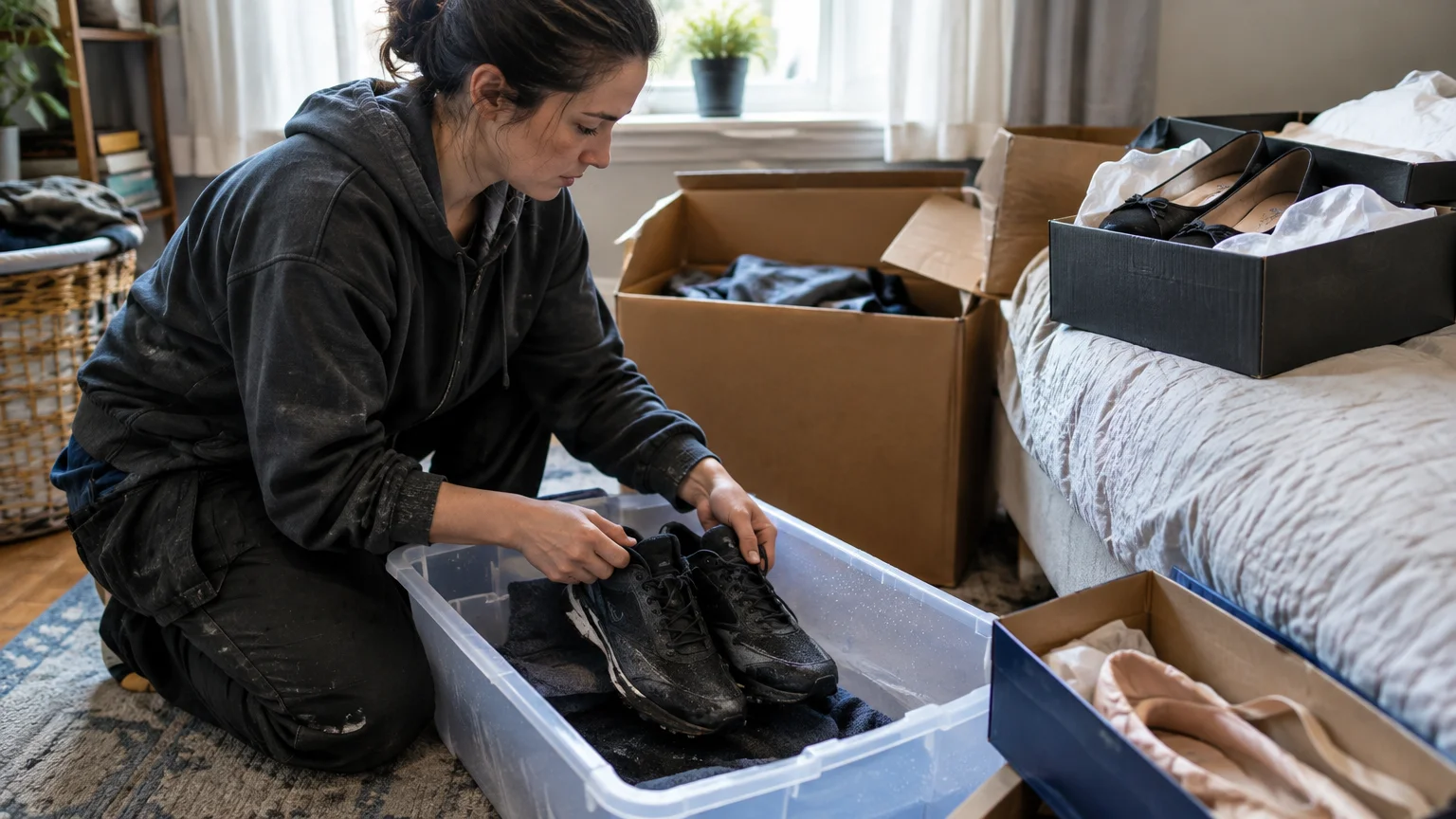
Wipe dirt from shoes before placing them near clothes. Stuff boots and structured shoes with clean paper to help them hold their shape. Wrap each pair in a cloth bag, clean paper, or its own shoe box.
Pack shoes near the bottom of a small box because they are heavy. Keep soles away from clean fabric. Never place wet shoes in a closed container, even when the move starts soon.
Special shoes may need more support. Use the original boxes when you have them. If not, wrap the shoes in soft paper. Avoid placing heavy items on top.
Secure Belts, Bags, Jewelry, and Small Accessories
Coil belts loosely so they do not bend sharply. Fill handbags with clean clothes or paper. Place them in dust bags or pillowcases. Keep straps from pressing against delicate surfaces.
Use small bags or divided containers for hair items, watches, cuff links, and costume jewelry. Thread necklaces through straws or wrap them in soft cloth to reduce tangles. Fine jewelry, key papers, and sentimental items should travel with the owner.
Write the owner’s name and contents on each small container. Put those containers inside one larger labeled box. This is safer than scattering small items among several clothing boxes.
What Clothes Should You Pack Last and Unpack First?
Pack clothing needed for moving day and the first week last. Keep it in a personal bag that is easy to reach. Do not place it deep inside the truck. This helps the household manage delays, weather changes, and late delivery.
Choose clothing that fits the move and the new home. Include work clothes, school clothes, sleepwear, socks, undergarments, shoes, and a light layer. A few towels and basic laundry items may also help on the first night.
Prepare an Essentials Bag for Moving Day
Each person should prepare one small bag with a change of clothes, sleepwear, socks, underwear, toiletries, medicine, and key items. Add layers for the weather and comfortable shoes. Keep the bag closed and labeled so it is not mistaken for a box.
A family may also need wipes, hand sanitizer, snacks, water, chargers, and basic cleaning items. These things are not clothes, but they can make the first day easier. Keep the bag in a car or safe area, away from heavy boxes.
Set Aside Clothing for the First Week
Choose enough clothes for work, school, appointments, and rest. Keep one outfit ready for bad weather or delayed delivery. Babies, children, and older adults may need extra changes during the move.
Unpack these items first at the new home. Set up one clear clothing area before opening every box. For larger moves, Long Distance Movers may help with loading and delivery. The essentials bag should still remain with the household.
How Can You Avoid Damaging or Losing Clothes During a Move?
Clothes stay safer when they are clean, dry, covered, and labeled. A simple inventory can show which boxes belong to each person. Careful loading also helps prevent crushed boxes and misplaced bags.
Most people do not need a professional to sort, clean, fold, label, and pack daily clothes. You can safely do these simple steps yourself. Professional help is useful when a move includes heavy furniture, many rooms, fragile clothing, stairs, tight spaces, or little time.
Protect Clothes From Moisture, Odors, and Stains
Never pack damp clothes. Let laundry dry fully before folding it. Keep clothes away from cleaning products, fuel, paint, food, and dirty shoes.
Use clean liners or bags when moving during rain. Do not seal wet containers and hope the clothes dry inside. While loading, keep clothing boxes away from leaks, sharp tools, and items that shed dirt.
Check boxes after delivery for water, tears, or crushing. If a box is wet, move the clothes to a dry area and spread them out. Quick action can help limit odors and fabric damage.
Create a Simple Inventory and Moving-Day Plan
Number each clothing box and record its main contents. Include the owner, season, room, and unpacking priority. Photos of open boxes can also help you remember what each container holds.
Use label colors for each person if that makes sorting easier. Keep valuable, special, or irreplaceable clothing with the owner. Do the same with clothing needed for work, travel, or an important event.
Key Takeaways
- Sort clothes before packing and remove items that no longer fit or get used.
- Fold most clothing, roll soft pieces, and hang garments that wrinkle easily.
- Use clean, dry containers and label each box by owner and contents.
- Keep jewelry, valuables, and first-week clothing with the owner.
- Make a moving checklist for clothing, supplies, labels, and essentials.
A thoughtful clothing plan saves time before, during, and after a move. It also helps prevent stains, wrinkles, crushed boxes, and missing items. Wichita Falls Texas Movers can support homes and offices across Wichita Falls with practical moving help.
Frequently Asked Questions
Is it better to roll or fold clothes for moving?
Folding is best for most shirts, pants, sweaters, and children’s clothes. Rolling can save space in suitcases and soft bags, especially for casual items. Formal clothing, structured jackets, and delicate garments should stay on hangers or receive extra cover.
Can clothes stay in dresser drawers during a move?
Clothes can stay in drawers only when the drawers are removed and packed safely, or when the furniture is light and easy to carry. Full drawers may make a dresser unsafe to lift. Pack heavy clothing separately and keep the drawers from sliding during transport.
How do you keep clothes from smelling during a move?
Pack only clean, fully dry clothing. Use clean boxes, avoid sealing damp fabric, and keep clothing away from shoes, food, chemicals, and wet areas. During a long move, check containers for leaks and air out clothing soon after delivery.
Should shoes be packed with clothes?
Shoes may share a box with clothing when each pair is clean, dry, and wrapped. Keep soles away from fabric and place shoes in bags or small boxes. Heavy shoes belong near the bottom. Valuable or delicate shoes should travel in their own protected container.
What should go in a moving-day clothing bag?
A moving-day bag should include a change of clothes, sleepwear, socks, underwear, comfortable shoes, and weather-ready layers. It may also hold toiletries, medicine, chargers, and personal items. Keep the bag with the owner instead of placing it under packed boxes.
Conclusion
Packing clothes well starts with sorting, not folding. The right container, label, and protection method can keep clothing clean and easy to find. By setting aside essentials and asking for help with hard lifting, a household can make moving day safer and less stressful.
If you need help planning the clothing part of your move, Contact us today to request a quote from Wichita Falls Texas Movers.
If you are not sure what you are dealing with, it is worth having someone look at it before it turns into a bigger job. Get in touch with Wichita Falls Texas Movers today and we will tell you where you stand.